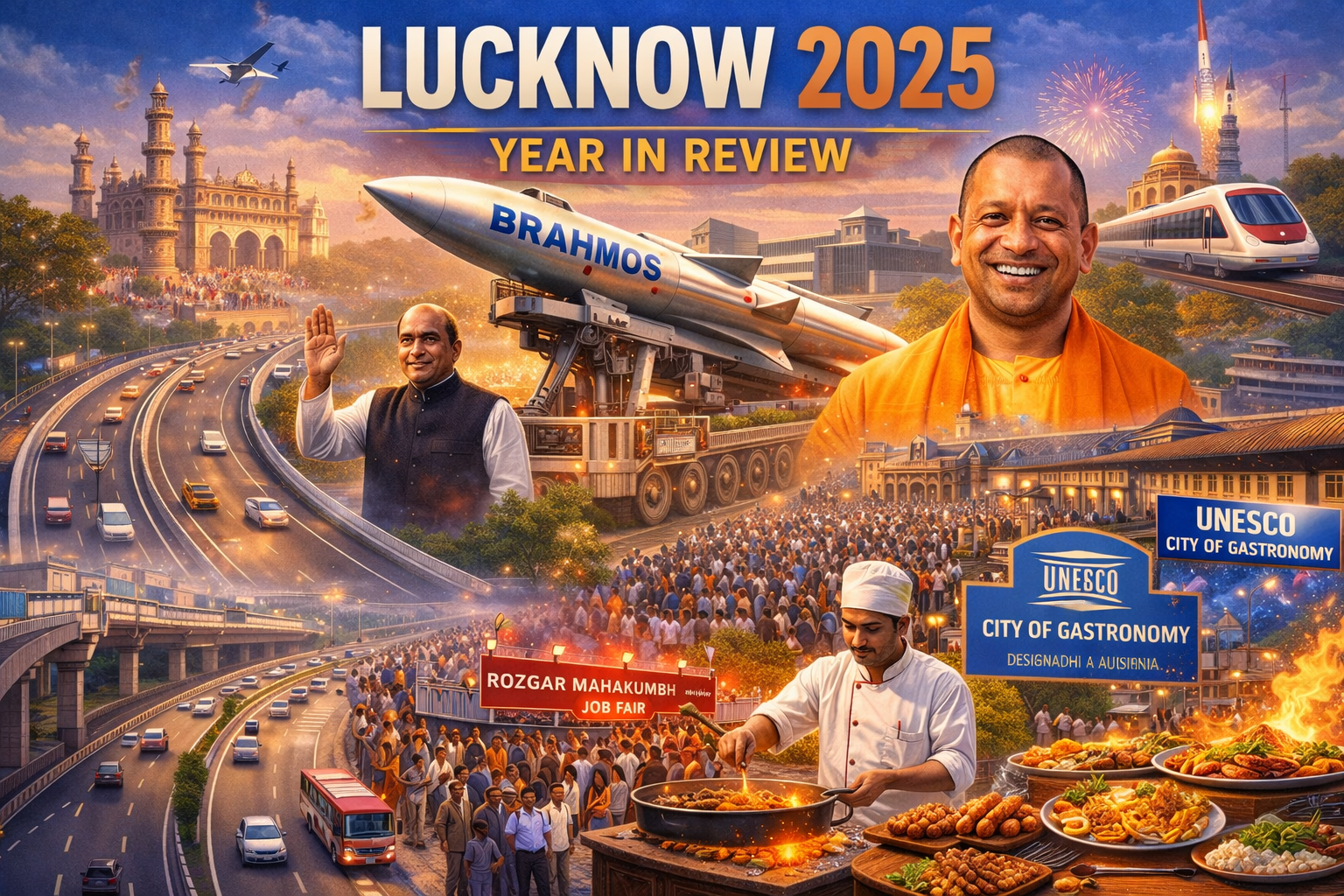
Lucknow: In 2025, Lucknow—the City of Nawabs and the administrative heart of Uttar Pradesh—stood tall at the crossroads of heritage and high growth. As the state scripted one of its most defining years, emerging as India’s most visited destination with over 137 crore domestic tourists, Lucknow found itself at the centre of this momentum. The city did not merely ride on Uttar Pradesh’s success; it actively shaped it—through landmark infrastructure projects, a historic defence manufacturing breakthrough, global recognition for its cuisine, massive employment drives, and a calendar filled with cultural, political and sporting energy.
While the Mahakumbh Mela in nearby Prayagraj became the spiritual epicentre of the year, its ripple effects were felt strongly in Lucknow. From bustling hotels and packed railway stations to policy decisions taken in the corridors of power, the capital city experienced a year of accelerated transformation, reinforcing its role as a growth engine in Uttar Pradesh’s march toward a $1 trillion economy.
A Global Culinary Crown: UNESCO’s Nod to Lucknow
One of the proudest moments for Lucknow in 2025 came when UNESCO inducted the city into its prestigious Creative Cities Network under the ‘Gastronomy’ category. The recognition placed Lucknow on the global culinary map, celebrating its legendary Awadhi cuisine—known for its refined flavours, slow-cooked dum pukht techniques, and iconic dishes such as galouti kebabs, nihari, korma and biryani.
The UNESCO honour was more than symbolic. It triggered a renewed focus on preserving culinary heritage, reviving age-old kitchens, and documenting traditional recipes passed down generations. Food walks, heritage dining experiences and gastronomy festivals saw a noticeable surge, drawing tourists who wanted to explore the city through its flavours.
Chief Minister Yogi Adityanath’s pitch for “One District, One Cuisine” gained momentum in this backdrop, with Lucknow positioned as the flagbearer of Uttar Pradesh’s diverse food traditions. For local chefs, home cooks and small eateries, the recognition translated into both pride and opportunity, reaffirming that the city’s cultural capital could also be an economic asset.
Defence Manufacturing Takes Off: BrahMos in Lucknow
If food defined Lucknow’s soul, defence manufacturing defined its strategic future in 2025. The successful production of the first batch of BrahMos supersonic cruise missiles from the Integration and Test Facility in Sarojini Nagar marked a watershed moment—not just for the city, but for India’s defence self-reliance mission.
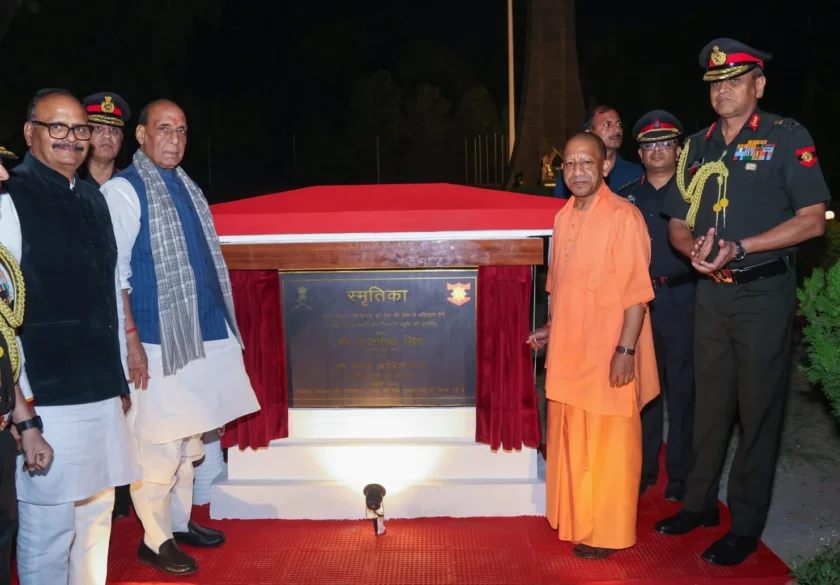
Inaugurated earlier in the year, the facility became a key node in the Uttar Pradesh Defence Industrial Corridor. The flagging off of the missiles by Defence Minister Rajnath Singh and Chief Minister Yogi Adityanath underscored the political and strategic significance of the achievement.
The BrahMos unit brought high-end manufacturing, skilled employment and ancillary industries to Lucknow, reshaping its industrial profile. Once known primarily for administration, education and culture, the city in 2025 began asserting itself as a contributor to national security and advanced manufacturing.
Building the Future: Flyovers, Metro Plans and the AI City Vision
Infrastructure development remained one of the most visible markers of change across Lucknow in 2025. Long plagued by congestion, the city witnessed the inauguration of key flyovers aimed at easing traffic and improving connectivity. Among them were the Indira Nagar to Khurram Nagar–Kalyanpur flyover, built at a cost of around ₹270 crore, and the Polytechnic to Munshi Pulia flyover, costing approximately ₹170 crore. Together, these projects significantly reduced bottlenecks in some of the city’s busiest corridors.
Beyond flyovers, plans for metro expansion, expressway linkages, the Green Corridor and the Kisan Path continued to progress, signalling a long-term vision for mobility and urban planning. The state budget’s allocation for an ambitious AI City—spread over 70 acres—added a futuristic dimension to Lucknow’s growth story. Envisioned as a hub for artificial intelligence research, startups, incubation centres and special economic zones, the project aims to leverage partnerships with institutions such as IIM Lucknow.
These initiatives collectively strengthened Lucknow’s pitch as an emerging technology, aero and knowledge hub, complementing its administrative stature.
Rozgar Mahakumbh: Aspirations on Display
Youth aspirations took centre stage during the Rozgar Mahakumbh 2025, one of the largest employment drives hosted in the city. Held at the Indira Gandhi Pratishthan in August, the three-day job fair attracted thousands of job seekers from across Uttar Pradesh. The crowds were so large that police deployment was required to manage queues and entry points.
With a target of facilitating around 50,000 job opportunities, the Rozgar Mahakumbh brought together government departments, PSUs and private companies under one roof. From manufacturing and IT to services and logistics, a wide range of sectors participated, reflecting the diversifying nature of employment in the state.
More than just a job fair, the event symbolised the state’s focus on skill development and youth empowerment, with Lucknow emerging as the focal point for policy-driven employment initiatives.

Mahakumbh’s Ripple Effect on the Capital
Although the Mahakumbh Mela unfolded in Prayagraj, Lucknow played a crucial supporting role as a transit and administrative hub. The city saw a steady influx of pilgrims passing through its airport, railway stations and highways, boosting hotel occupancy, transport services and local commerce.
Improved rail connectivity, enhanced road networks and coordinated administrative planning ensured smoother movement of devotees. For businesses in Lucknow—from hotels and restaurants to taxi operators and retailers—the Mahakumbh translated into tangible economic gains, reinforcing the city’s importance in the broader tourism ecosystem.
Culture, Campus Life and Sports Energy
Lucknow’s cultural and academic institutions added vibrancy to the year. IIM Lucknow’s flagship fest, Manfest–Varchasva, blended business competitions, cultural performances and sports events, attracting participants from across the country. Concerts, debates and entrepreneurial challenges reflected the city’s youthful pulse.
Lucknow University hosted inter-hostel and inter-college festivals featuring athletics, debates, dance and theatre, keeping campus life buzzing. Sports also gained prominence through events like the Athrise Championships, which promoted disciplines such as athletics, badminton and chess, especially among young athletes.
Traditional celebrations and cultural showcases continued to underline Lucknow’s Awadhi ethos, even as modern formats and venues added a contemporary touch.
Governance, Security and Weather Tests
Like any major city, Lucknow faced its share of challenges in 2025. In November, heightened security alerts following an incident in Delhi led to intensive checks and patrolling across the city. Earlier in the year, extreme heatwaves forced revised school timings, while bouts of heavy rainfall disrupted traffic and daily routines.
These episodes tested administrative preparedness, but coordinated responses ensured minimal long-term disruption. Improved law and order mechanisms, quicker response times and better coordination between agencies reinforced public confidence in governance.
Political and Civic Milestones
As the seat of power in Uttar Pradesh, Lucknow remained politically active throughout the year. The city hosted organisational activities of the ruling BJP, preparations related to ideological memorials such as the Rashtra Prerna Sthal, and visits by senior leaders for rallies, meetings and convocations.
On the civic front, Lucknow ranked third among large cities in Swachh Survekshan 2025, a recognition of improved cleanliness and waste management. Investments in EV infrastructure, defence exports and digital governance initiatives further strengthened its urban profile.
While isolated incidents—ranging from fraud cases to sporadic crimes—made headlines, swift action underlined the state’s emphasis on maintaining law and order.
A Capital Poised for the Next Leap
As 2025 drew to a close, Lucknow stood transformed yet grounded. The year blended its timeless cultural heritage with modern ambition—from kebabs earning global acclaim to missiles rolling out of cutting-edge facilities, from flyovers easing daily commutes to job fairs shaping youthful futures.
In many ways, Lucknow mirrored Uttar Pradesh itself in 2025: confident, assertive and forward-looking. As plans for AI hubs, aero cities and deeper global engagement take shape, the milestones of this year have laid a strong foundation. For the City of Nawabs, 2025 will be remembered as a turning point—when history, hospitality and high growth came together to redefine its destiny.